Allegory of Divine Providence and Barberini Power

About the Work
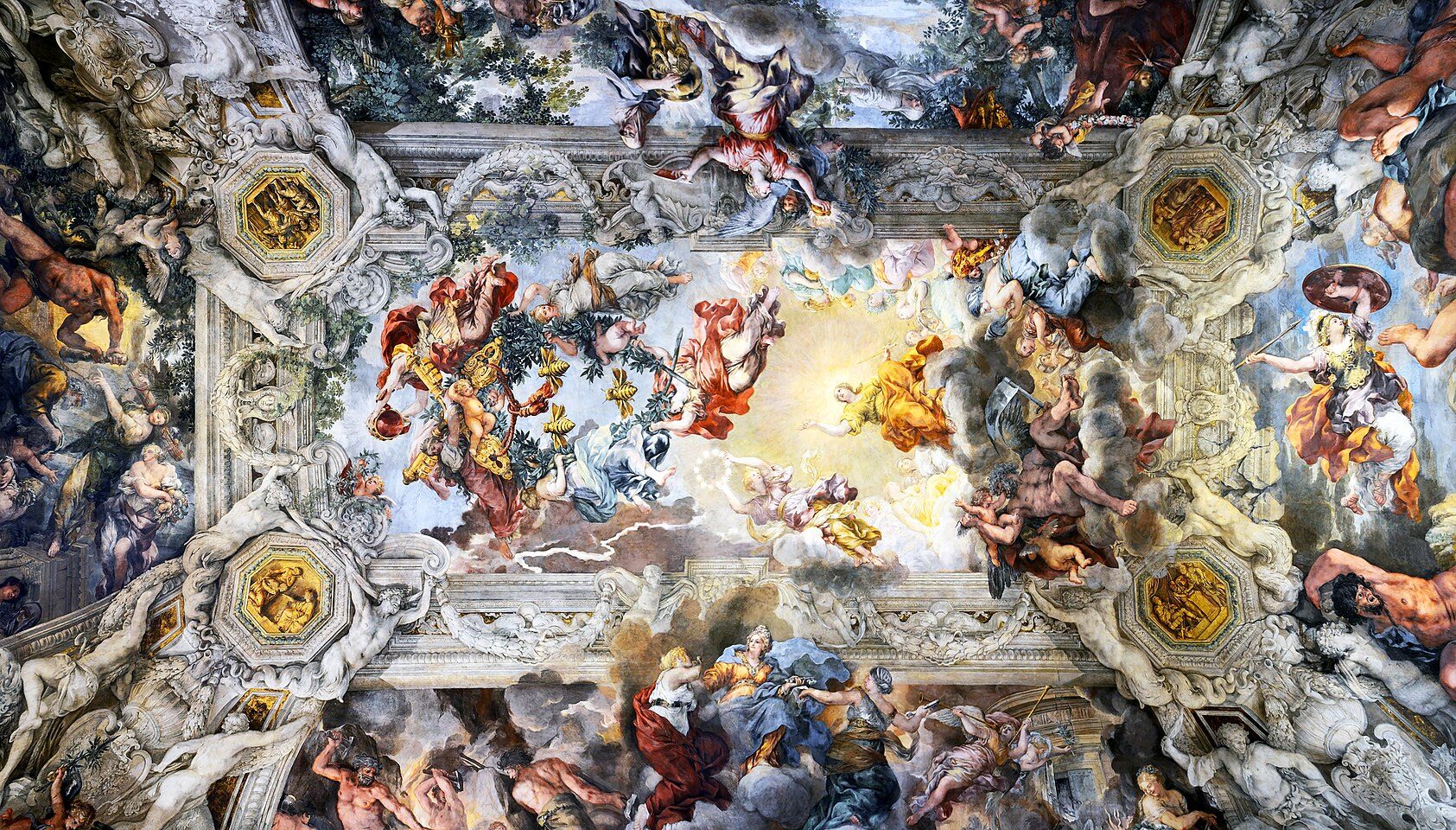
Allegory of Divine Providence and Barberini Power, also known as the Triumph of Divine Providence, is the monumental ceiling fresco painted by Pietro da Cortona for the great salon of Palazzo Barberini. Completed in the 1630s, it is one of the defining works of Roman Baroque painting and an extraordinary fusion of art, architecture, illusion and political imagery.
The fresco transforms the ceiling into an apparently open sky filled with allegorical figures, clouds, movement and Barberini symbols, presenting the rise of Pope Urban VIII and his family as part of a divinely ordered world.
History & Context
Pietro da Cortona began work on the ceiling in the 1630s, during the pontificate of Urban VIII Barberini. The decoration formed part of the larger transformation of Palazzo Barberini into a dynastic statement for one of seventeenth-century Rome’s most powerful families.
The program does more than decorate the room. It turns the salon into a visual manifesto of Barberini authority, celebrating Divine Providence, papal power and the family’s political ascent. The Barberini bees, one of the family’s most recognizable emblems, recur throughout the composition and help bind the religious allegory to a very earthly message of dynastic prestige.
What to Notice
Look first at the way the painted architecture appears to dissolve the actual ceiling. Figures seem to move beyond the physical limits of the room, creating the impression of an open, animated sky.
Then look for the Barberini bees. They are not decorative accidents: they are dynastic symbols woven into the allegorical program. The work constantly moves between universal ideas such as Providence and Virtue and the very specific celebration of Urban VIII and his family.
The composition is deliberately difficult to absorb in a single glance. Follow the movement from one group of figures to another and notice how clouds, bodies and painted architectural elements create a continuous sense of upward motion.